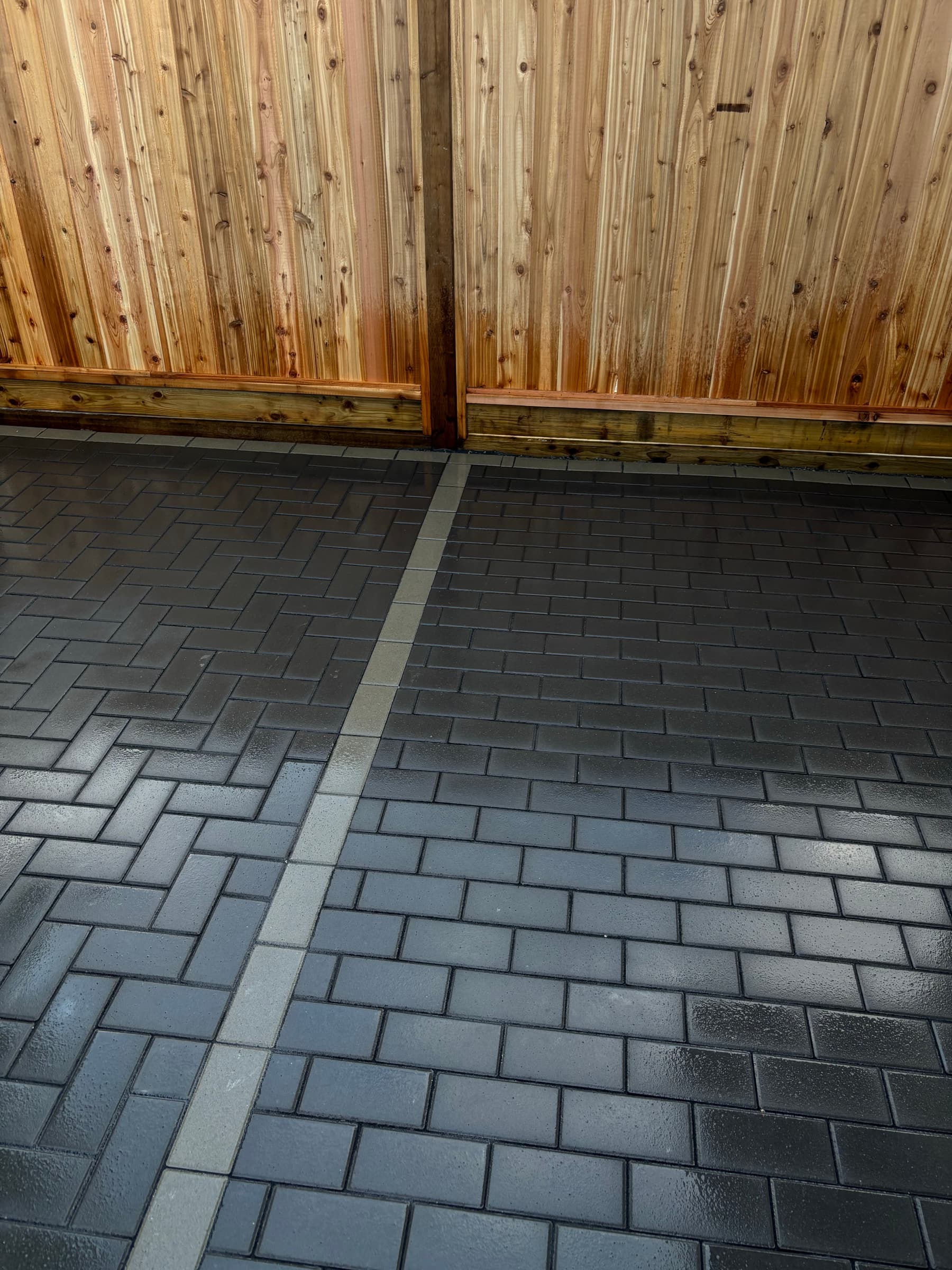
Paver Sealing & Maintenance
Joint resand, stain protection, and re-setting stones that have sunk.
Overview
Pavers don't need to be sealed, but sealed pavers stay clean longer and resist oil stains.
What's included
What we offer
- Pressure wash with appropriate PSI for paver type
- Weed and moss removal
- Polymeric joint sand top-up
- Penetrating sealer (matte or wet-look)
- Spot-lift and re-set sunken stones
- Optional efflorescence cleaner for white haze
Process
How we
approach it.
- 01
Site walk
We get picture and measurements, if needed walk the site with you to review the details of your maintenance project.
- 02
Proposal
We offer flat rate or hourly pricing on all repair work, sealing and cleaning changes year over year. We offer several professional finishes so you get the clean look you want!
- 03
Build
Cleaning, poly sand and sealing have to be on different days to achieve professional results. We schedule our sealing and maintenance crews by area, weekly and keep you updated on each phase.
- 04
Completion
Polymeric joint sand swept and water-activated. One last compaction pass to seat the pavers. Walkthrough with you before we leave.
FAQ
Quick answers
How often should I seal?
Every 3 to 5 years for a sealed paver. The sealer wears off, and you'll see water stop beading on the surface. That's the cue.
Matte or wet-look sealer?
Matte preserves the natural paver look and is what we recommend by default. Wet-look darkens and glosses the stone. Striking but more obviously sealed. Personal preference.
Can I do this myself?
Pressure washing and joint top-up, sure. Sealer application is fussy. Too much pools and looks bad, too little doesn't bond. Most DIY seal jobs we get called to redo.