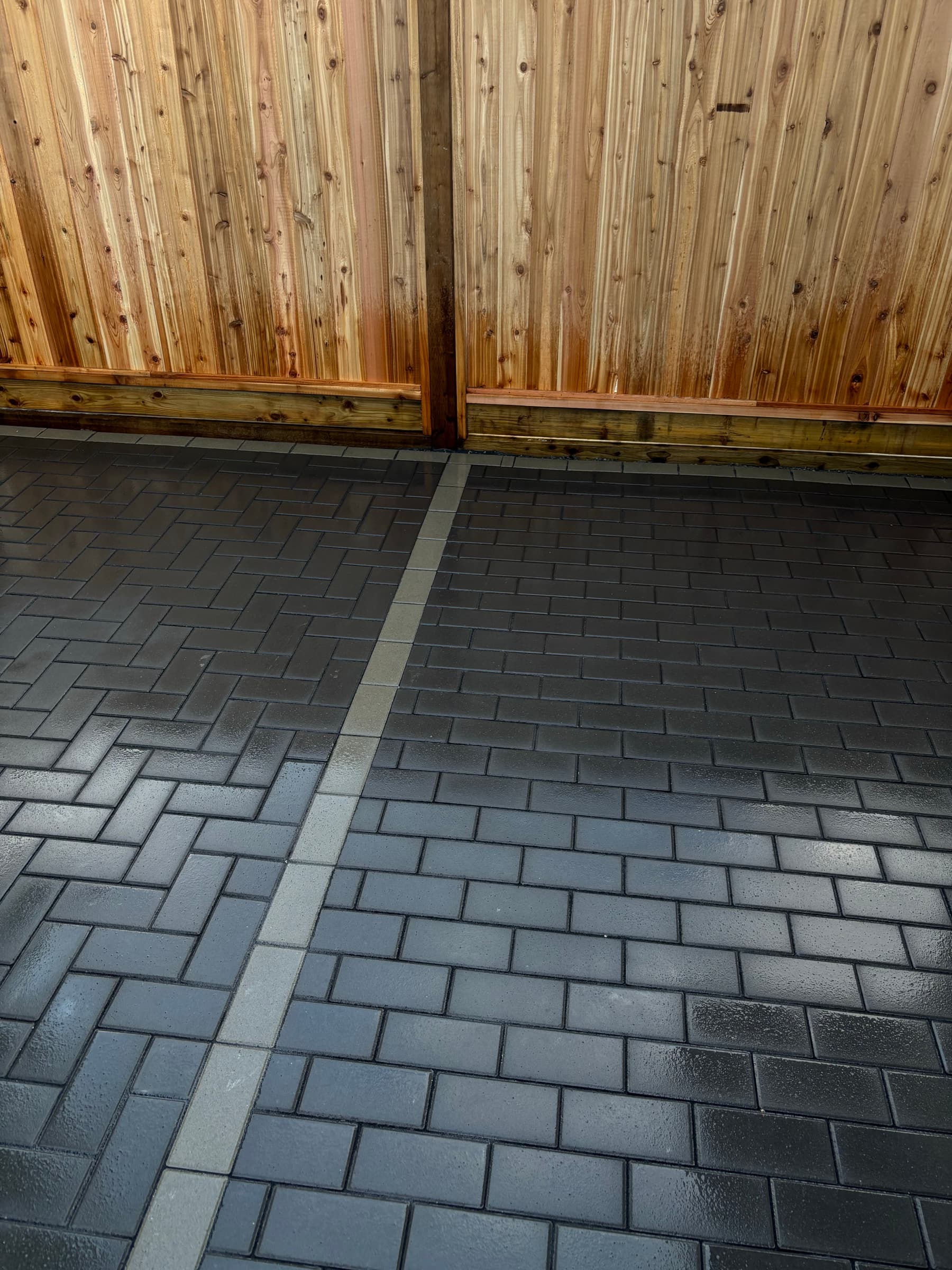
Paver Installation in Richmond
Steveston driveways, Brighouse pool decks, stable bases over fill.
Neighborhoods
- Steveston
- Brighouse
- Terra Nova
- Burkeville
- Hamilton
- Garden City
Local detail
Richmond is built on fill, and that single fact drives how we build here. On reclaimed, low-lying ground, long-term settlement is the dominant engineering challenge, not an afterthought. A surface that looks perfectly flat the day we finish it can develop dips and low spots within a few years if the base underneath wasn't deep enough or dense enough to sit still on soft ground. Most of the paver problems we're called to fix in Richmond trace straight back to a base that was built for firmer soil than what's actually there.
So we over-build the base as a rule here. Ten to twelve inches of excavation minimum, even on walkways that would get less elsewhere, with woven geotextile separating the base from the native soil so the two never mix and the base can't sink into the ground below. It's more excavation and more material than a Richmond job strictly looks like it needs on the surface, and it's the difference between a driveway that's still flat in fifteen years and one that's rippled in five.
Steveston driveways, Brighouse pool decks, and patios across Terra Nova and Garden City are regular work for us, all built on that deeper base. Built on the right foundation, a Richmond paver surface lasts decades. The base depth is what decides it, which is exactly why we don't cut the excavation short here even when the ground looks like it would let us. Common Richmond work: driveways, pool decks, and excavation & grading.
What we build here
Common questions
- Does Richmond's soil cause problems for pavers?
- It can, and it's the thing we build around here. Richmond sits on reclaimed, low-lying fill, so long-term settlement is the dominant challenge rather than an afterthought. A surface that looks perfectly flat the day we finish can develop dips within a few years if the base underneath wasn't deep or dense enough to sit still on soft ground. Most of the paver problems we're called to fix in Richmond trace straight back to a base built for firmer soil than what's actually there.
- How do you stop settlement in Richmond?
- We over-build the base as a rule. Ten to twelve inches of excavation minimum, even on walkways that would get less elsewhere, with woven geotextile separating the base from the native soil so the two never mix and the base can't sink into the softer ground below. It's more excavation and more material than a Richmond job looks like it needs on the surface, and it's exactly the difference between a driveway that's still flat in fifteen years and one that's rippled in five.
- Do you build driveways in Steveston?
- Yes, Steveston driveways are regular work for us, along with patios and pool decks across Terra Nova, Brighouse and Garden City. They're all built on that deeper, over-excavated base to handle the fill underneath. Steveston's proximity to the water can also add a drainage consideration or two, which we sort out at the site walk so it's built into the plan rather than dealt with after the fact.
- How long will a Richmond driveway last?
- Built on the right base, decades. The base depth is what decides it, which is why we don't cut the excavation short here even when the ground looks like it would let us. A shallow base on Richmond fill is a driveway that ripples in five years; a properly deep one, separated from the native soil with geotextile, is one that still looks flat long after. The extra day of digging up front is what buys you the decades.